Final Blog of the Year!!! Due Wednesday, June 19th. Be sure you have completed the other 2 blogs for this marking period. Remember, 1/2 credit is better than NO CREDIT!!!!!!
Find a news article about a current event that deals with the whole country (not just Rochester or NY). The article can NOT be about pop culture- movies, tv, music, etc. Once you have selected and read the article, post a link to it in your comment (just copy and paste the web address of the article). Then, briefly summarize the article. Be sure to include answers to the following questions in your summary:
When was the article written?
Who/what is the article about?
Where does the article take place?
Why is the article important/How does the content of the article affect the United States?
Be sure to read some of the summaries of your classmates, and comment on their posts (as always). Check back occasionally to see if anyone commented on your post- they may have a question about your article that you can/should answer.
Here are some possible sites that you can look at to find news stories (you are not limited to these suggestions):
http://www.cnn.com/
http://www.reuters.com/
http://www.bbc.com/news/world/us_and_canada/
Wednesday, June 12, 2013

Monday, May 6, 2013
North Korea

At the end of World War II, Japan was defeated and forced to give up its military forces, endure American occupation, and also give up its colonies - most importantly, Korea. Japan had ruled Korea since 1910, using Korean labor and resources to help aid the economy and eventual war efforts.
Once Korea gained this independence, it was divided by the Soviet Union and United States along the 38th parallel, with a communist government based in the North, and a democratic, US friendly regime installed in the South. This led to an outbreak of conflict between these systems which resulted in a three year war from 1950-1953, involving Americans, Koreans, Chinese, and the Soviet Union. The armistice signed in 1953 ended fighting for the time being, leaving the 38th parallel as a demilitarized zone to separate the two countries.
Now, 60 years later, North Korea is led by 29-year old leader Kim Jong Un, who has issued numerous hostile statements and threats to its neighbors and the United States in recent months (even declarations of a "State of War" and use of nuclear weapons). Since February, Diplomats have discussed possible courses of action and the actual likeliness of North Korea following through on these threats.
Use this understanding to address the following prompt in complete sentences:
Predict and Explain how/why the US would have to get involved if North Korea attacked South Korea and/or Japan
At the end of World War II, Japan was defeated and forced to give up its military forces, endure American occupation, and also give up its colonies - most importantly, Korea. Japan had ruled Korea since 1910, using Korean labor and resources to help aid the economy and eventual war efforts.
Once Korea gained this independence, it was divided by the Soviet Union and United States along the 38th parallel, with a communist government based in the North, and a democratic, US friendly regime installed in the South. This led to an outbreak of conflict between these systems which resulted in a three year war from 1950-1953, involving Americans, Koreans, Chinese, and the Soviet Union. The armistice signed in 1953 ended fighting for the time being, leaving the 38th parallel as a demilitarized zone to separate the two countries.
Now, 60 years later, North Korea is led by 29-year old leader Kim Jong Un, who has issued numerous hostile statements and threats to its neighbors and the United States in recent months (even declarations of a "State of War" and use of nuclear weapons). Since February, Diplomats have discussed possible courses of action and the actual likeliness of North Korea following through on these threats.
Use this understanding to address the following prompt in complete sentences:
Predict and Explain how/why the US would have to get involved if North Korea attacked South Korea and/or Japan
Monday, April 15, 2013
Genocide
Blog #1 Due Tuesday 4/23/13
In class we have inspected documents & evidence pertaining to the Holocaust, the attempted genocide of the Jewish people by Adolf Hitler and his Nazi party. For this blog, you must investigate at least one other event of genocide from world history and answer the follow up question.
Use the links provided to answer all prompts:
http://worldwithoutgenocide.org/
http://endgenocide.org/learn/
http://www.genocidewatch.org/updates/byregion.html
http://www.unitedhumanrights.org/genocide/genocide-in-sudan.htm
http://www.unitedhumanrights.org/genocide/armenian_genocide.htm
--Define Genocide
---Research another event/conflict that involved genocide & report on it (summary; participants, time period, location, etc.)
----Answer the following question: How do completely normal and sane human beings get persuaded to commit acts of genocide?
Use the links provided to answer all prompts:
http://worldwithoutgenocide.org/
http://endgenocide.org/learn/
http://www.genocidewatch.org/updates/byregion.html
http://www.unitedhumanrights.org/genocide/genocide-in-sudan.htm
http://www.unitedhumanrights.org/genocide/armenian_genocide.htm
--Define Genocide
---Research another event/conflict that involved genocide & report on it (summary; participants, time period, location, etc.)
----Answer the following question: How do completely normal and sane human beings get persuaded to commit acts of genocide?
Thursday, March 28, 2013
Spring Has Sprung
Blog #4- Due Wednesday, April 10th
 Here is another "gimmie" blog, where all you need to do to earn full credit is respond (only once) to the following question:
What do you look forward to most about Spring/Spring Break?
PS- This is the last blog for the marking period- make sure that you have completed blogs 1-3 for this marking period as well. Remember, even if you complete the blog late, you can still earn partial credit, which is better than none!
What do you look forward to most about Spring/Spring Break?
PS- This is the last blog for the marking period- make sure that you have completed blogs 1-3 for this marking period as well. Remember, even if you complete the blog late, you can still earn partial credit, which is better than none!
Tuesday, March 26, 2013
Causes of World War II
Blog #3- Due Thursday, March 28th
 There were many reasons that the world went to war a second time beginning in 1939. What were some of the causes of World War II? Do you think that anything could have been done to prevent World War II? If so, what do you think could have been done differently.
Do you think that America was right to stay neutral at the beginning of the war? What event caused the United States to join the war? Do you think that the United States would have joined the war if that event did not occur?
Be sure to back up your responses to the questions with details or examples that support your answers.

Do you think that America was right to stay neutral at the beginning of the war? What event caused the United States to join the war? Do you think that the United States would have joined the war if that event did not occur?
Be sure to back up your responses to the questions with details or examples that support your answers.
Friday, March 15, 2013
World War II Dictators
Blog #2- Due Friday, March 22nd
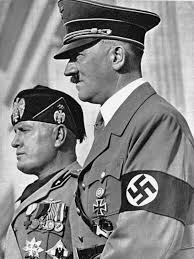
The Great Depression did not just affect the United States, but rather was a world-wide depression. As in the United States, the people, desperate for relief from the depression, looked to the government for help. Why do you think that people in countries like Germany, Italy, Japan and the Soviet Union were willing to accept leaders like Hitler, Mussolini, Tojo, and Stalin? How do you think these leaders planned to help their countries? Do you think these leaders were completely evil, or do you think they truly believed they were doing what was best for their people?
The Great Depression did not just affect the United States, but rather was a world-wide depression. As in the United States, the people, desperate for relief from the depression, looked to the government for help. Why do you think that people in countries like Germany, Italy, Japan and the Soviet Union were willing to accept leaders like Hitler, Mussolini, Tojo, and Stalin? How do you think these leaders planned to help their countries? Do you think these leaders were completely evil, or do you think they truly believed they were doing what was best for their people?
Thursday, February 14, 2013
The Great Depression
Blog #1- Due Thursday, February 28th
 When the Great Depression began in 1929, President Hoover suggested that it was not the responsibility of the government to help the country to get back on its feet. He felt that private charities, businesses and churches needed to step in and help the people. Eventually, he came to realize that the problem was too large for the government to do nothing, so he started a few programs in the hopes of getting the country back on its feet. Unfortunately for Hoover, many people felt that he did "too little, too late."
When President Roosevelt came into office, he quickly began creating programs to try and help the country out of the Depression. Within the first hundred days of his presidency, Roosevelt sent several bills to Congress to be made into laws. Roosevelt quickly expanded the power of the government to try to end the Depression. Some people criticized Roosevelt, stating that he expanded the power of the government too much. Others applauded his efforts arguing that the government has a responsibility to take care of its people, especially in a time of crisis.
Do you think the government has a responsibility to help its people?
If so--
How much of a responsibility does the government have?
What are some things the government should do to help its people?
If not--
Who does have the responsibility for helping the people of a country?
What is the responsibility of the government?

When President Roosevelt came into office, he quickly began creating programs to try and help the country out of the Depression. Within the first hundred days of his presidency, Roosevelt sent several bills to Congress to be made into laws. Roosevelt quickly expanded the power of the government to try to end the Depression. Some people criticized Roosevelt, stating that he expanded the power of the government too much. Others applauded his efforts arguing that the government has a responsibility to take care of its people, especially in a time of crisis.
Do you think the government has a responsibility to help its people?
If so--
How much of a responsibility does the government have?
What are some things the government should do to help its people?
If not--
Who does have the responsibility for helping the people of a country?
What is the responsibility of the government?
Monday, January 14, 2013
Treaty of Versailles
Blog #4- Due Wednesday, January 23rd
 As World War I came to an end, the Allied Powers needed to come up with a plan for peace after the war. Many people felt that this plan for peace should greatly punish the countries that started the war. People felt anger over the amount of lives that were lost, and the destruction of Europe. Many felt that someone needed to be held responsible and accountable for the devastation. Others felt that a plan for peace that greatly punished the countries involved would only lead to problems in the future. These people felt that the plan for peace should not punish as much as it should set up a way for Europe to rebuild and create a way to make sure that a war like this never begins again.
How do you think the Allied Powers should have handled the peace treaty?
*Who should take the blame for the war?
*Should they be punished? If so, how should they be punished? (give specific examples)
*What could be added to the peace treaty to prevent a war from ever happening again?
 As World War I came to an end, the Allied Powers needed to come up with a plan for peace after the war. Many people felt that this plan for peace should greatly punish the countries that started the war. People felt anger over the amount of lives that were lost, and the destruction of Europe. Many felt that someone needed to be held responsible and accountable for the devastation. Others felt that a plan for peace that greatly punished the countries involved would only lead to problems in the future. These people felt that the plan for peace should not punish as much as it should set up a way for Europe to rebuild and create a way to make sure that a war like this never begins again.
 How do you think the Allied Powers should have handled the peace treaty?
*Who should take the blame for the war?
*Should they be punished? If so, how should they be punished? (give specific examples)
*What could be added to the peace treaty to prevent a war from ever happening again?
Subscribe to:
Posts (Atom)